Skip to content

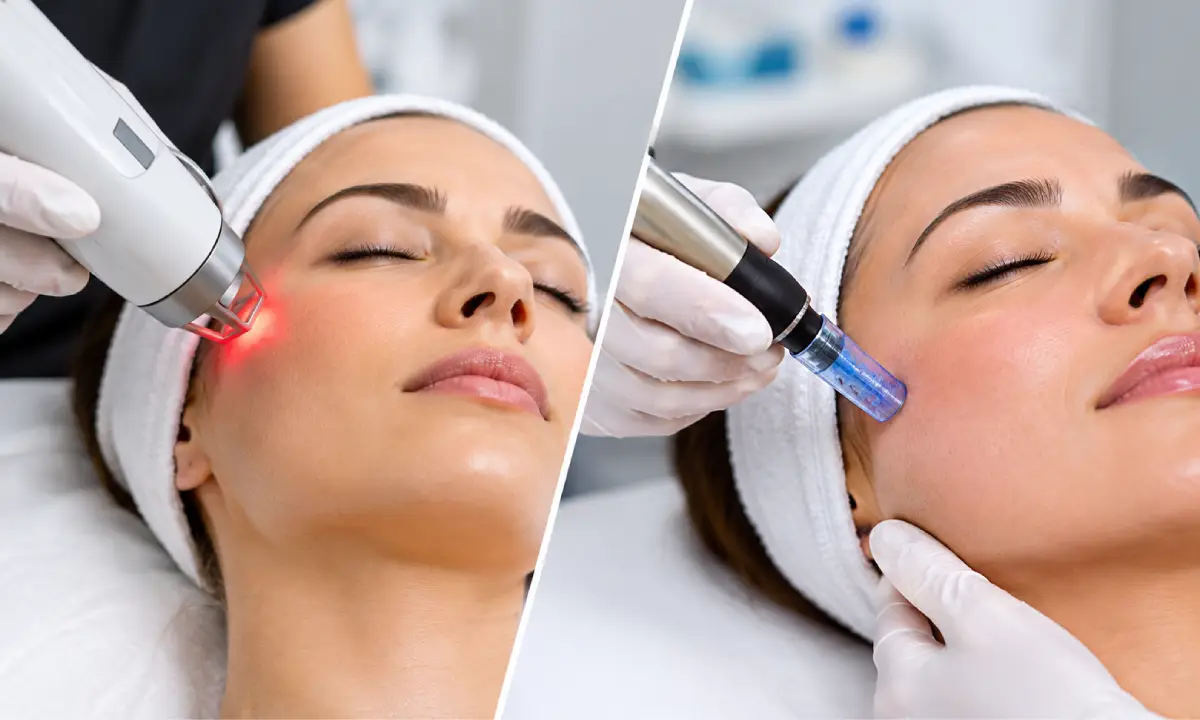
Table of Contents
Bathroom lighting is honest. It shows the brown spots along the cheekbones that were not there five years ago, the rough patch near the jaw, the acne scars that softened but never faded. Most patients arrive at Uptown Medical Aesthetics with a list like that.
The answer usually comes down to a single distinction: are you treating what sits on the skin’s surface, or what’s built underneath? That question separates laser vs. microneedling more cleanly than any feature-by-feature comparison.
How Do I Know If I Need Laser or Microneedling?
Laser targets visible surface concerns like sun damage, brown spots, redness, and roughness by delivering controlled light energy to specific skin depths. Microneedling uses fine needles to prompt the body to rebuild collagen, making it better suited to scarring, pore appearance, and firmness. An in-person skin assessment remains the most reliable way to decide.
The Short Version: What Each Treatment Is Actually Better At
Laser handles color and surface. Microneedling handles structure and texture.
A laser treatment for skin tends to be the stronger option for sun damage, brown spots, visible capillaries, and persistent redness, because light energy can target pigment and vessels. Microneedling earns its place with acne scarring, enlarged-looking pores, and skin that has lost firmness.
Both build collagen, which is why patients confuse them. The overlap is real for fine lines and dullness, where either can help and skin tone, downtime, and timeline become the deciding factors.
Light Energy vs. Micro-Injury: How Each One Triggers Repair
Results differ because of the mechanism. Laser devices send precise light energy into targeted skin layers, where it heats or removes damaged tissue and prompts collagen production.
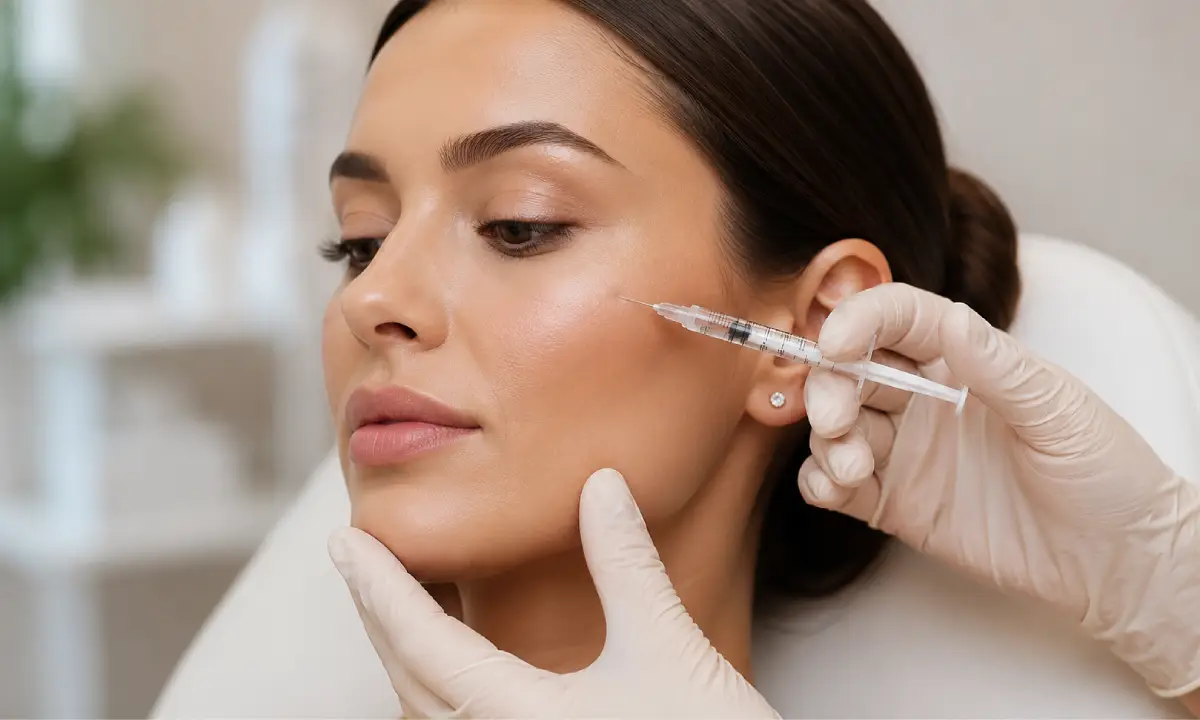
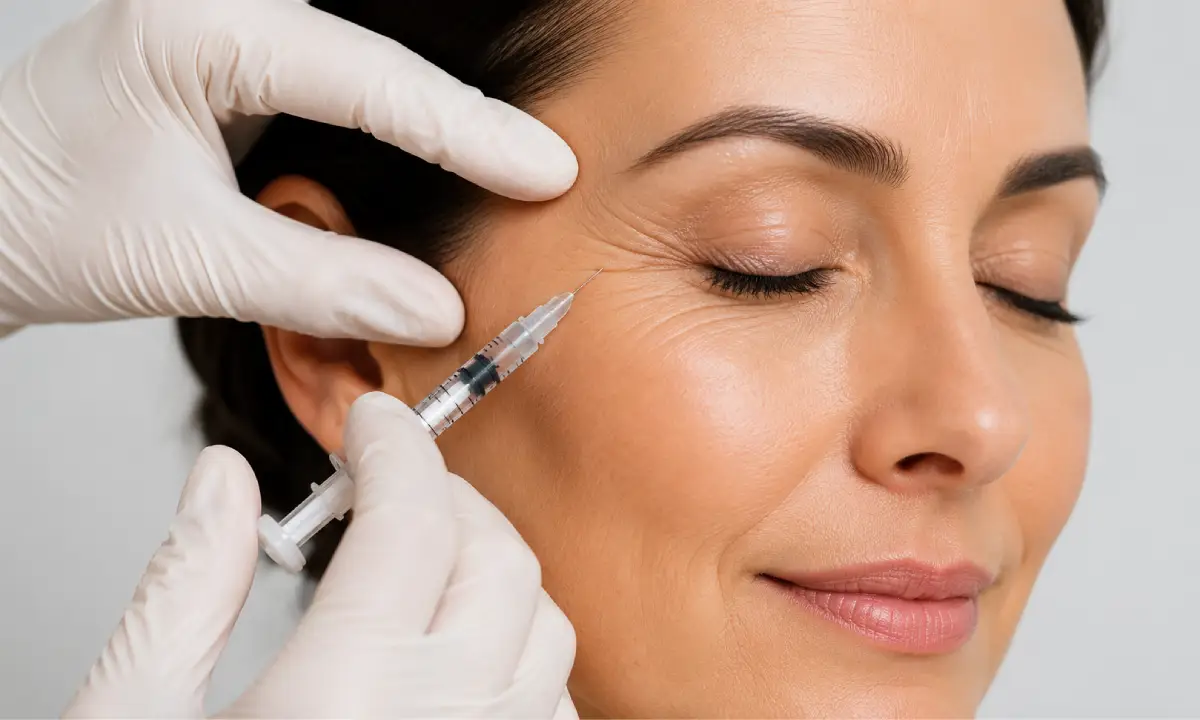
A microneedling treatment works through controlled injury instead of heat. Clinically known as collagen induction therapy, it relies on SkinPen®, the first FDA-cleared microneedling device and the one we use at Uptown Medical Aesthetics, to create microscopic channels that trigger the body’s own repair response.
Laser treats what the light can find, which is why it excels at color. Microneedling works evenly across the full area, so it works best on texture and scarring. One accuracy note: BBL® HEROic™ uses broadband light rather than a true laser, though it falls under our laser skin treatment category.
When Laser Skin Treatments Are the Better Fit
Choose Laser Skin Treatment when the concern has color. Sun damage, age spots, uneven pigmentation, and stubborn redness respond to light in a way needles cannot replicate.
Our options span a range of intensity so the device matches the skin:
- Moxi, a gentler fractional option many patients use as a first step
- BBL® HEROic™, aimed at redness, pigmentation, and sun damage
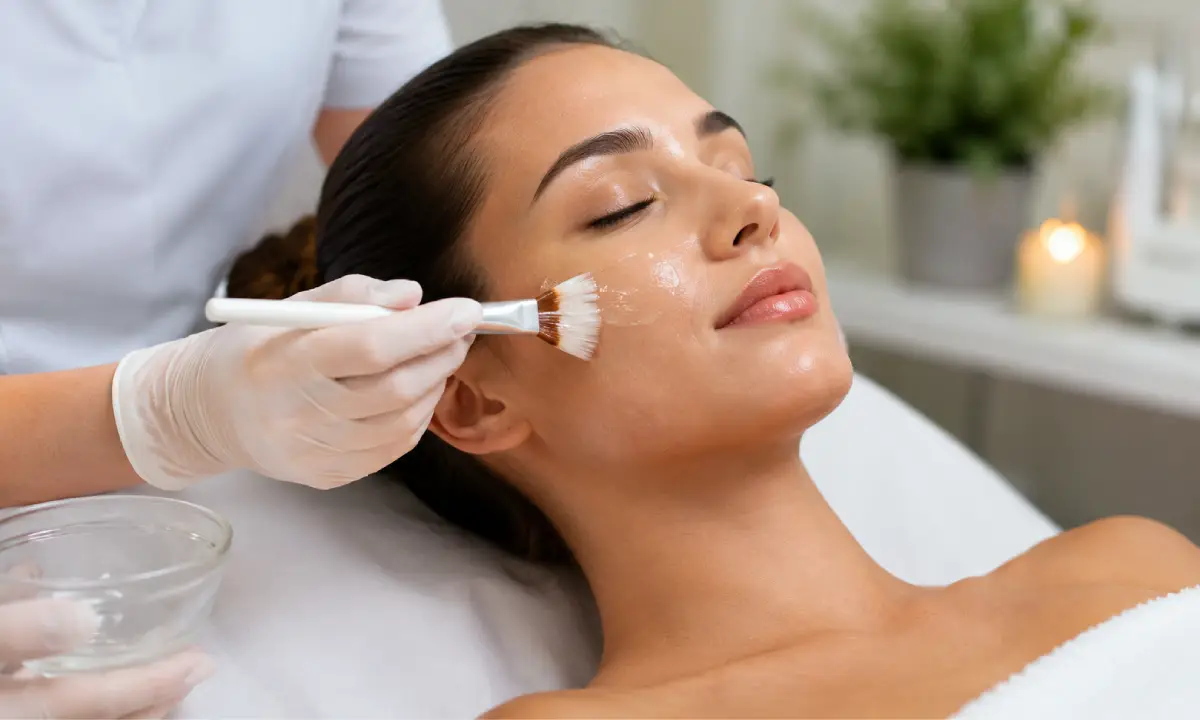
- CoolPeel®, a CO2 approach to laser skin resurfacing with far less downtime than older CO2 methods
- Clear + Brilliant® and Halo™, for a different depth of correction
Because intensity varies this much, provider assessment carries more weight here than with microneedling. Fitzpatrick skin type, the clinical scale running from very fair to very deep, guides the device choice. Most sessions take 30 to 60 minutes, with mild redness afterward that usually settles quickly.
When Microneedling Is the Better Fit
Choose Microneedling when the concern is structural. Acne scars, surgical scars, uneven texture, and early fine lines respond better to collagen rebuilding than to tone correction.
Skin tone frequently influences the decision. Microneedling for skin rejuvenation generally suits a wider range of skin tones than more aggressive resurfacing lasers, making it an appropriate first step for patients told that heat poses an additional risk.
Patience is the trade-off. Improvements build over several weeks, and most patients need three to six sessions spaced about four weeks apart. Laser change is often visible after one.
It also flexes. VIRTUE RF adds radiofrequency energy for tightening, AquaGold® delivers nutrients through a similar microchannel approach, and Sculptra® pairs with it when volume loss is also a factor.
Downtime, Skin Tone, and Timeline: The Practical Deciders
When concern type does not settle the question, three practical factors usually do.
Downtime comes first. Microneedling typically means redness similar to a mild sunburn for 24 to 48 hours, with most people back to normal activity the next day. Laser recovery depends on the device, from minimal after Moxi or CoolPeel® to longer after deeper resurfacing. With a wedding on the calendar, laser often shows change faster, while a microneedling series needs months of lead time.
Your skin history may override both. Previous reactions to heat, a melasma pattern, or active breakouts may shift the recommendation away from the treatment a patient inquired about. Altitude also matters. When comparing laser vs. microneedling in Erie, CO, it’s important to account for UV exposure, which is higher than most people expect, so sun protection is required after either treatment.
Laser vs Microneedling: Why This Often Is Not an Either/Or Decision
Most patients will eventually use both. A common sequence begins with laser treatment for pigment and sun damage, followed by microneedling over several months to address texture and scarring that light alone did not resolve. You can combine laser treatments, such as Moxi, BBL® HEROic™, and CoolPeel®, if your skin can tolerate it.
Common Questions About Laser and Microneedling
Which one hurts more?
We use numbing cream before microneedling, and most clients describe the sensation as light pressure or vibration. Laser comfort varies according to device and depth, and your provider will guide you through it.
Can both be done in the same appointment?
Not on the same area on the same day. Skin needs time to finish one repair cycle before starting another, so your provider will space them.
Does either one treat active acne?
Neither is a primary acne treatment. Microneedling addresses scarring once breakouts have calmed, and active inflammation needs to be under control first.
The Decision Comes Down to What You Are Treating
Color and surface damage point toward laser. Scarring, texture, and firmness point toward microneedling. Fine lines and dullness sit in the middle, where skin tone, downtime, and timeline settle the laser vs microneedling question for you.
The more useful next step is usually not picking a side. It is getting an accurate read on which concern bothers you most, which is clearer to a provider than it is in the mirror. Often that conversation changes the order of treatment, not the choice itself.
Ready to choose the right treatment for your skin? Schedule a consultation with our skincare specialists to determine whether laser treatment or microneedling is the best fit for your goals.