Skip to content
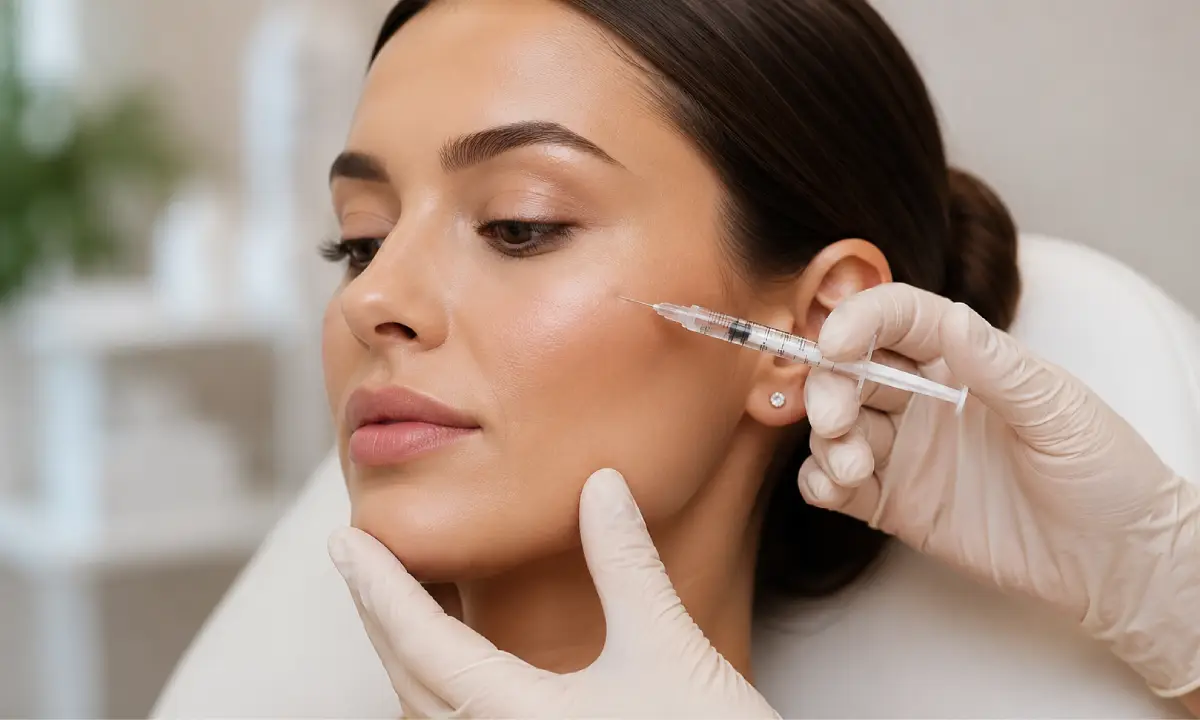
Table of Contents
There is a specific moment many people notice when something about their face has shifted. The smile lines from nose to mouth are deeper than they used to be. The temples look slightly hollow. The jawline is less defined, with a subtle softening that was not there a few years ago. These changes are not about surface texture or fine lines. They are about structural volume loss beneath the skin, and that distinction matters enormously when choosing the right treatment.
Uptown Medical Aesthetics in Erie, CO offers Sculptra® fillers as part of a broader approach to facial rejuvenation that addresses volume loss at its source rather than simply treating the surface. If you have been wondering whether Sculptra is the right tool for the specific areas that concern you most, this guide focuses on exactly that.
How Long Does Sculptra Last Compared To Regular Dermal Fillers?
Sculptra results typically last up to two years, and in some patients longer, which is significantly longer than most hyaluronic acid fillers that generally last six to eighteen months. The reason for this difference is the mechanism: Sculptra stimulates the body’s own collagen production gradually rather than adding immediate volume. Because the improvement is built from the patient’s own collagen, it develops and holds differently than a filler that simply adds material to the tissue.
How Sculptra Stimulates Collagen in Specific Areas
The collagen-stimulating effect of Sculptra does not work the same way in every area of the face. Its mechanism makes it particularly effective in regions where volume loss is due to the breakdown of the deeper structural support layer rather than surface-level skin changes. Understanding this helps clarify which treatment areas produce the most consistent and impactful outcomes.
When Sculptra is injected into a targeted area, the poly-L-lactic acid microparticles are gradually absorbed as the body builds collagen in response to their presence. This process takes place over several months, which is why a series of treatment sessions spaced several weeks apart is typically recommended rather than a single session. Most patients undergo two to three sessions to achieve their desired result, with collagen production continuing to improve the appearance of the treated areas for months after the final session. Sculptra fillers in Erie, CO at Uptown Medical Aesthetics are structured around this timeline, with providers building a treatment plan that accounts for gradual development rather than expecting immediate correction.
Smile Lines: Why Sculptra Addresses Nasolabial Folds at the Root
Nasolabial folds, the lines that run from the sides of the nose to the corners of the mouth, are among the most common aesthetic concerns for patients in their 30s through 60s. These folds deepen over time, largely because the mid-face loses volume and structural support, causing the overlying soft tissue to descend and create a more pronounced crease. Hyaluronic acid fillers placed directly in or near the fold can provide immediate softening. Still, they do not address the volume deficit in the cheek above that is contributing to the fold’s appearance.
Sculptra addresses nasolabial folds more effectively by rebuilding the structural support in the mid-face that underlies them. As collagen production increases in the cheek and mid-face region, the tissue regains its support, which softens the fold from above rather than simply filling the crease from below. Many patients find this produces a more natural and sustainable improvement than fold-direct filler alone. For patients with moderate to significant nasolabial folds, Sculptra is often recommended as a foundational treatment, sometimes combined with a small amount of hyaluronic acid filler for immediate refinement.
Temples: The Area Most Often Overlooked
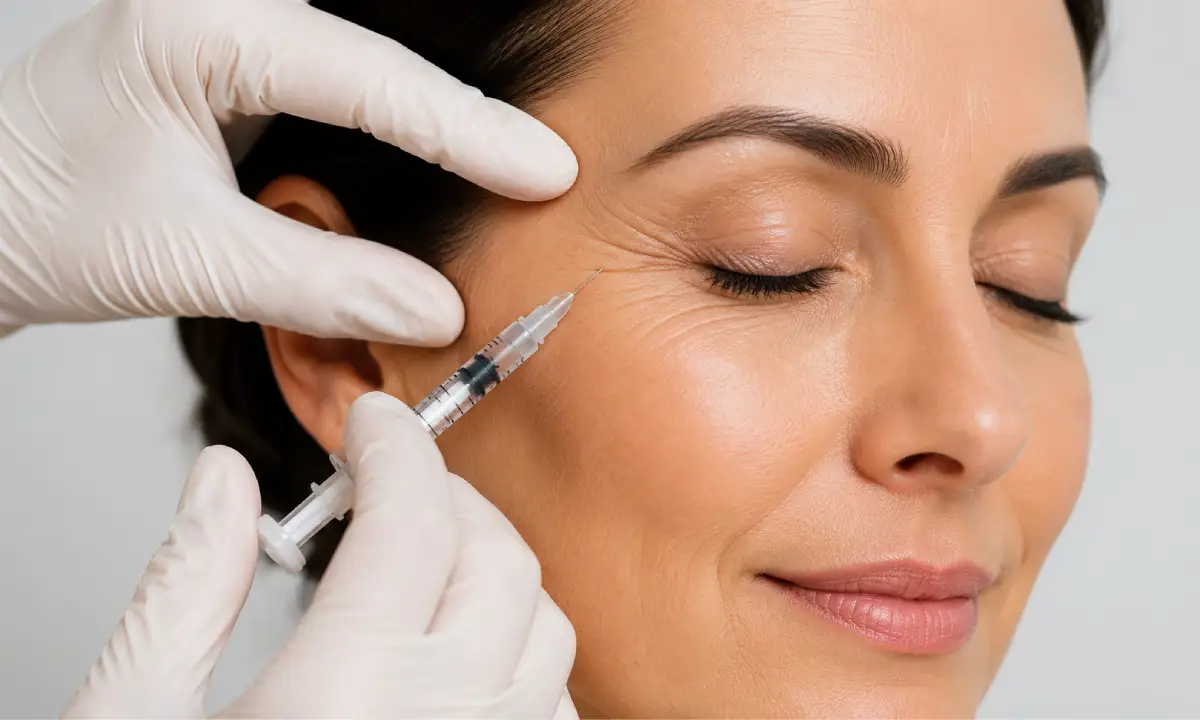
Temple hollowing is one of the most reliable signs of facial aging, and it is one of the areas patients most often overlook when considering treatment. As the temporal fat pad diminishes with age, the sides of the forehead take on a slightly sunken appearance that can make the face look older, more angular, or more tired regardless of how the lower face appears. Even patients who address their cheeks and under-eye area often find that unaddressed temple hollowing affects the overall balance of their result.
Sculptra is well-suited for temple restoration because the area benefits from gradual, structural volume replacement rather than a large, immediate bolus of material. Rebuilding the support in the temple region over a series of sessions creates a more proportionate, naturally youthful frame for the face without creating the overfilled appearance that can occur when other filler types are used in this area. For patients in Erie, CO who are beginning to notice facial asymmetry or an increasingly angular upper face, Sculptra for temple hollowing is worth discussing during a consultation.
Jowls: Using Sculptra to Support Jawline Definition
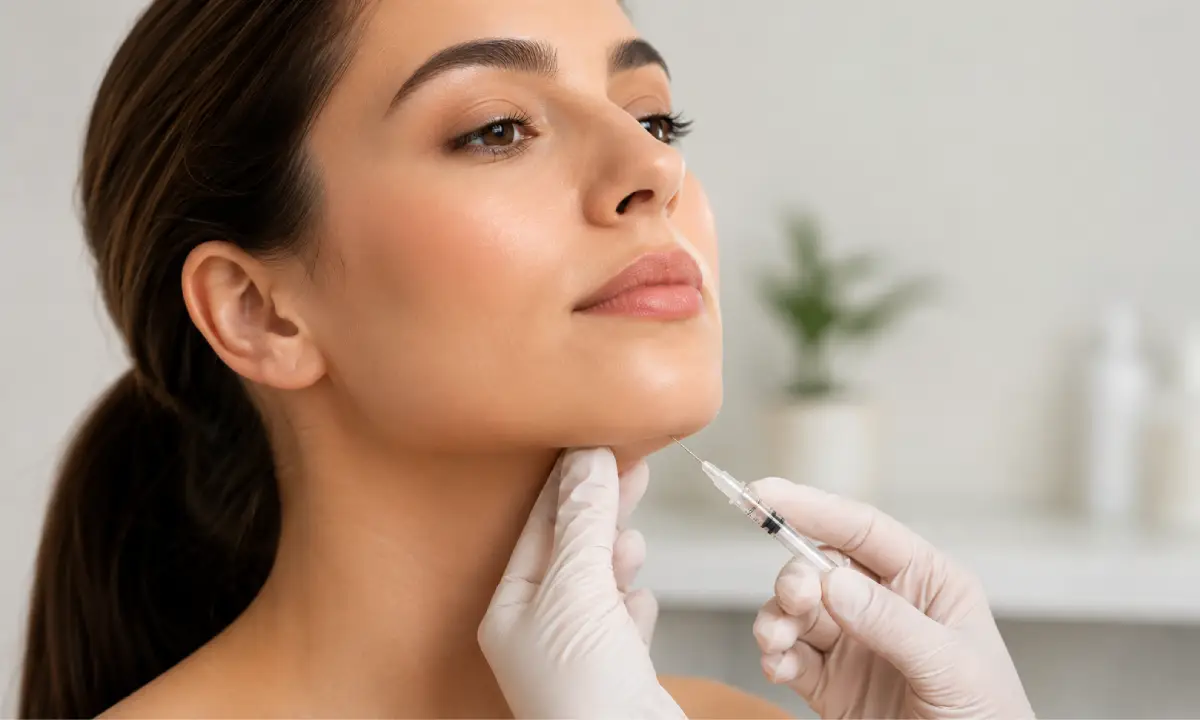
Jowling, the soft tissue that begins to descend below the jawline with age, is one of the changes patients most associate with looking older. True jowl formation involves a combination of volume loss, skin laxity, and soft tissue descent, and not all of these factors respond to the same treatments. Sculptra addresses the volume loss component by rebuilding structural support in the lower face and along the jawline, which can improve jaw definition and reduce the appearance of soft tissue that has begun to fall below the jawline.
Sculptra is most effective for patients with early-to-moderate jowling in which volume depletion is a significant contributing factor. For patients with more advanced skin laxity, Sculptra may be combined with a skin-tightening treatment, such as microneedling with radiofrequency or a device-based lifting procedure, to address both the structural and surface components simultaneously. A thorough consultation is the most reliable way to determine which combination of treatments fits the degree of change a patient is experiencing and the outcome they are hoping for.
Your Face Deserves a Treatment Built Around Its Actual Needs
Sculptra is not a fill-the-line treatment. It is a structural rebuilding tool, and its best outcomes come from placing it in the areas where volume loss is genuinely driving what bothers you most. That assessment requires someone who can look at your face, understand what is actually changing, and build a plan around that rather than a menu of options.
Uptown Medical Aesthetics is ready to have that conversation with you. Book a personalized filler consultation today and let the team in Erie, CO help you figure out whether Sculptra, a combination approach, or a different treatment path is right for what you are actually seeing and what you are hoping to achieve. You can also reach out through the contact page with questions before your first visit. Our team looks forward to helping you find the right approach for your face.